
Give the locksmith a precise service request before dispatch
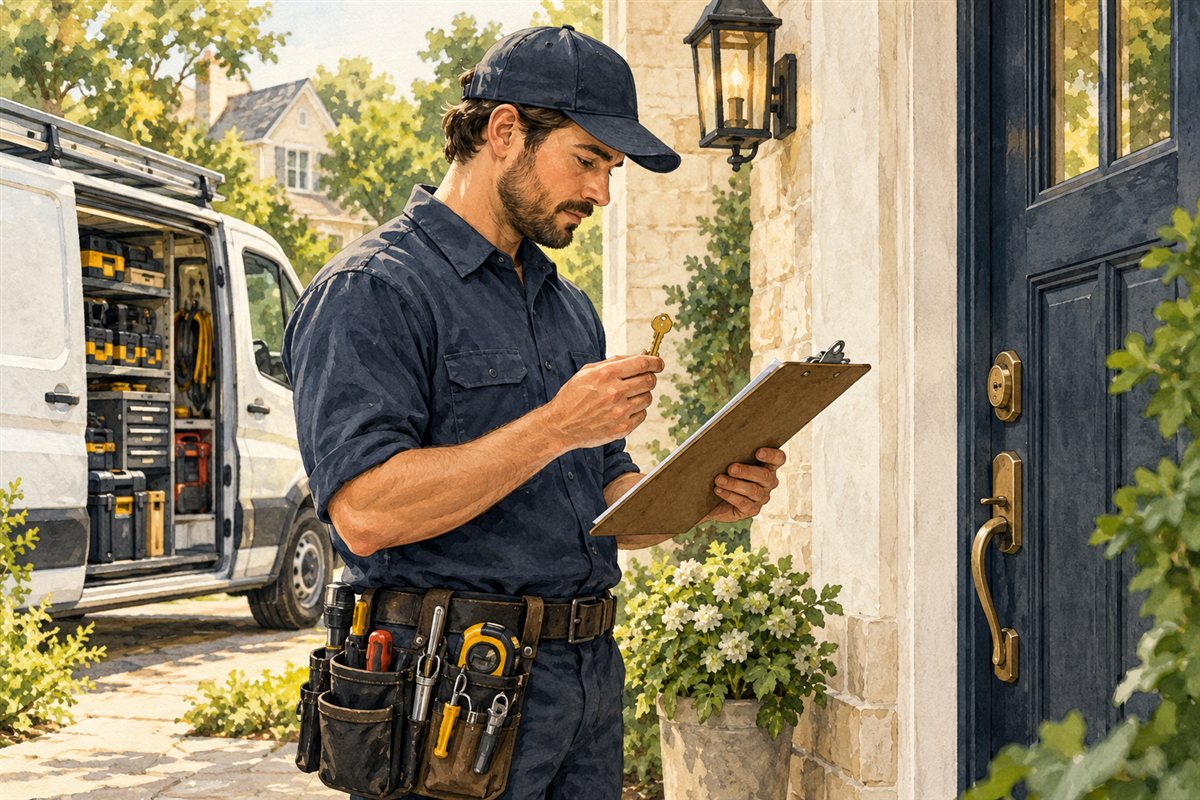
A caller might request service for a shop entrance while a property contact wants a separate item quoted at the same address. Those details can become confused when intake, dispatch and billing happen in different conversations. A useful locksmith handoff names the service location, contact and requested scope explicitly. Keep the focus on coordination: record what the customer asks for and let the field visit establish the work details.
Identify the service point and the contact
Capture the customer-described door, entrance or other service point rather than relying on the street address alone. Note the agreed meeting location and callback contact. If several people are involved, distinguish the booking contact from the person expected to meet the technician.
Keep messages about the request in shared intake and review the draft job before dispatch. Flag unclear scope or contact details for follow-up. Avoid treating an office summary as a technical assessment or an answer to any separate verification requirement the business follows.
Make dispatch updates useful to everyone involved
Give dispatch the appointment details and any customer timing constraints. Use scheduling and maps to coordinate the field visit, with a clear owner for updating the customer when plans change. Record the new arrangement so another coordinator can answer the next call consistently.
When the on-site contact changes, update the job rather than leaving the revision in a private text. The technician should be able to find the meeting details and current request together. Keep billing questions with the office contact responsible for resolving them.
Keep each quoted item identifiable
For work involving several service points, use customer-recognizable location names in the quote. Separate the agreed visit scope from optional additional work. Record the customer's signed choice and make it clear which items are ready to proceed and which await an answer.
If materials or a return visit are needed, record the outstanding item and its next action. Stock and purchasing records can help coordinate preparation. A follow-up appointment should carry the same location names so the technician does not have to rebuild the request.
Close with a concise visit account
Capture completed scope, time, parts and any agreed follow-up in the field record. Photos and forms can provide supporting context where appropriate to the business process. Write the completion note so the office can understand the outcome without translating technician shorthand.
Check that the invoice describes the approved work using the same service-point labels. Keep customer payment questions and later messages attached to the job. If one item remains open, state it clearly instead of letting a general completed status imply everything was finished.
A handoff checklist for your team
- Which door or service point does this request name?
- Who is meeting the locksmith at the location?
- Who can answer scope and billing questions?
- Which quoted items has the customer approved?
- Does any service point need a return visit?
See the connected workflow.
Explore how CrewBarn brings office planning, field work and the customer’s side of the job together.
Explore CrewBarn → Meet the customer portalProduct context: CrewBarn capabilities and customer portal details. This article discusses business workflows, not technical repair or compliance instructions.